


When trying to find the product management technique that’s right for your business, looking at other successful companies is a good starting point. One such company is Spotify which saw massive growth thanks to its unique approach to product management. It managed to increase its customer base to 15 million active users in just six years1.
Organizations are shifting to Agile because it offers flexibility, faster time-to-market, and a customer-centric approach that adapts quickly to changing business needs. As the framework of the future, Agile empowers teams to deliver continuous value, making it essential for thriving in today’s fast-paced, innovation-driven market2.
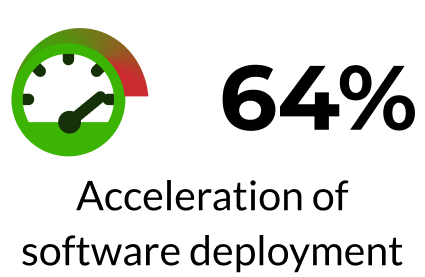
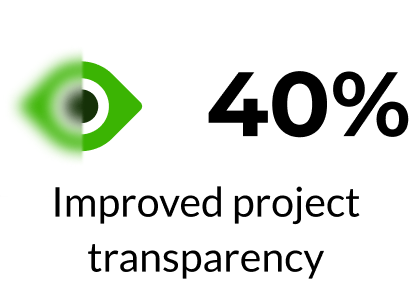
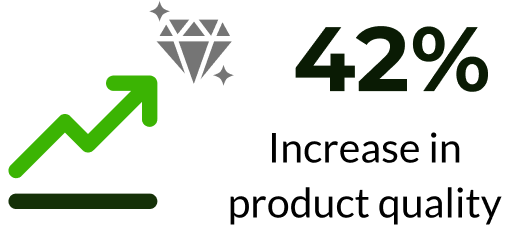
The world of Agile is evolving rapidly3, and the Spotify Model stands out as a compelling case study of how traditional scaling frameworks like SAFe may no longer be the best fit for every organization. When Spotify introduced its innovative Agile model, it was seen as a shift away from the prescriptive nature of SAFe and a move toward greater autonomy, flexibility, and alignment through a people-first approach. But why did Spotify deviate from SAFe, and what does it signal about the future of Agile practices?

Why Spotify Moved Away from Traditional SAFe
Spotify’s decision to move away from the traditional SAFe model stemmed from its recognition that rigid frameworks can stifle creativity and slow down innovation4. As a tech company operating in a highly dynamic environment, Spotify needed a model that allowed teams to experiment, fail fast, and pivot without being bogged down by heavy governance. SAFe, with its detailed processes, predefined roles, and ceremonies, was initially adopted to create alignment at scale, but it came at the cost of flexibility and innovation.

Over time, Spotify realized that the rigidity of SAFe didn’t align with its culture, which emphasizes trust, autonomy, and minimal hierarchy. As a result, they developed their own model, centered around lightweight structures like squads, tribes, chapters, and guilds, allowing for rapid scaling without compromising innovation. This model empowered teams to make decisions independently while staying aligned with broader company goals.
Key Concepts in the Spotify Model
The Spotify model is built around a specific structure of Agile product development teams that consists of the following key elements (visualizations credited to BusinessMap5):
- Squads: Squads are small, cross-functional teams that operate like mini-startups. Each squad has end-to-end responsibility for a specific feature or product area. They have complete autonomy in deciding how to achieve their goals, which allows them to adapt quickly to changes and innovations.
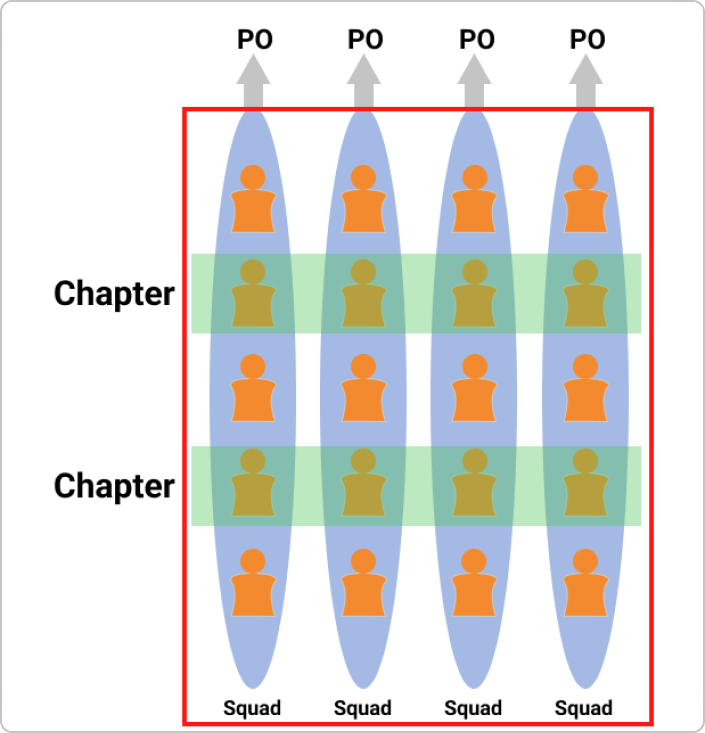
- Tribes: Tribes are collections of squads that work in related areas. Each tribe supports up to 150 people (inspired by Dunbar’s number) and has a tribe lead who helps coordinate across squads while maintaining alignment without micromanaging.
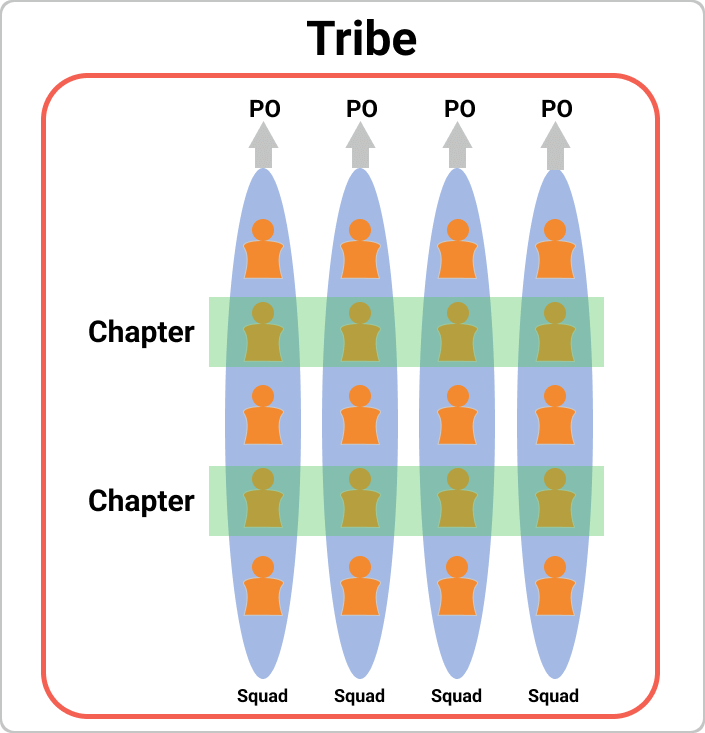
- Chapters and Guilds: Chapters are groups of individuals with similar skills or roles within a tribe, such as frontend developers or testers. Guilds are larger communities that span multiple tribes, allowing experts from across the organization to share knowledge and best practices.
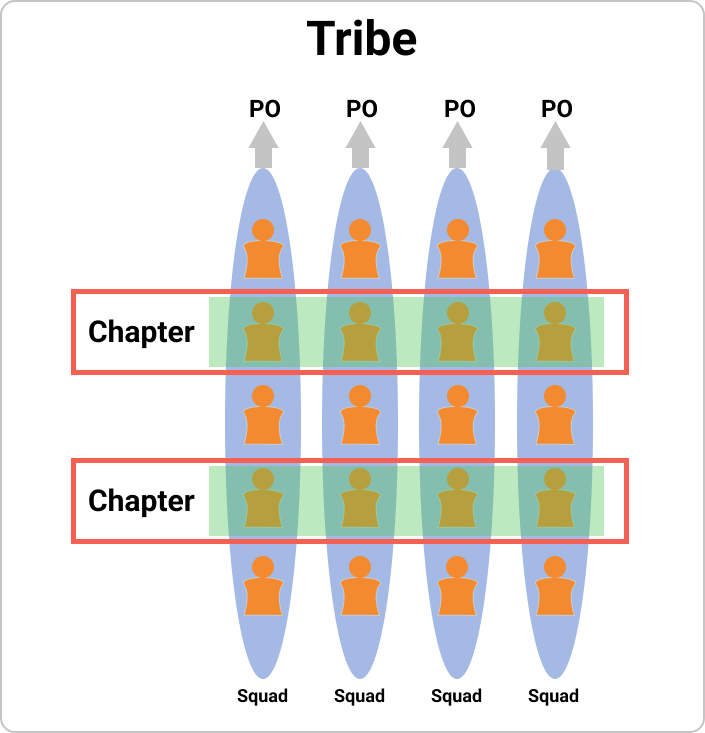
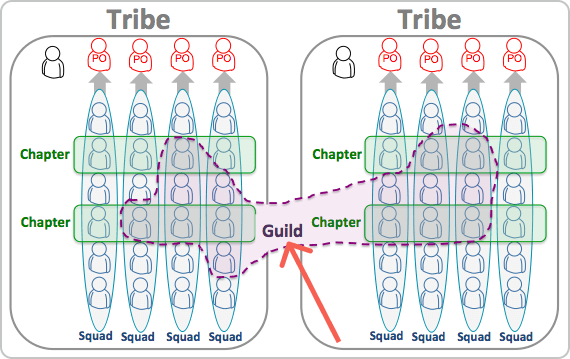
- Autonomy and Alignment: The Spotify Model strongly emphasizes balancing autonomy with alignment. While squads are given the freedom to decide how they work, they must align with the company’s overall vision and goals. This ensures that teams remain innovative while moving in the same direction.
- Lightweight Governance: Unlike SAFe, the Spotify Model doesn’t have rigid, top-down governance. There are no prescriptive roles like Release Train Engineer (RTE) or Product Management required for scaling. Instead, leadership and coordination happen organically through tribe leads and agile coaches.
Differences Between the Spotify Model and SAFe
- Flexibility vs. Structure:
- Spotify Model: Focuses on flexibility, allowing teams to choose their methods and tools. Governance is minimal, enabling rapid adaptation and innovation.
- SAFe: More structured and prescriptive, with clearly defined roles, ceremonies, and processes across the enterprise. It emphasizes governance and alignment across multiple teams.
- Scaling Philosophy:
- Spotify Model: Scaling is achieved through loosely coupled, tightly aligned squads and tribes. This organic scaling allows for greater autonomy, but it may require strong cultural cohesion to succeed.
- SAFe: Provides a highly structured approach to scaling through predefined roles, processes, and ceremonies (e.g., PI Planning). This makes it easier to scale across large organizations with complex hierarchies.
- Team Autonomy:
- Spotify Model: Squads have almost complete autonomy over their work, allowing them to innovate and experiment freely. The focus is on empowering teams rather than enforcing a standardized process.
- SAFe: Teams follow a more standardized approach, with less autonomy in certain areas. The emphasis is on consistency and alignment across the organization, which can sometimes limit flexibility.
- Cultural Focus:
- Spotify Model: Strongly emphasizes a culture of trust, learning, and continuous improvement. The model thrives in environments where innovation and adaptability are prioritized.
- SAFe: Focuses more on process adherence and alignment. It is well-suited for organizations where a unified approach to scaling and governance is needed, even if it means sacrificing some flexibility.
- Use Cases:
- Spotify Model: Ideal for organizations that value innovation, quick adaptation, and want to empower their teams. It’s often used in tech companies and startups where agility and autonomy are paramount.
- SAFe: Suitable for large enterprises with complex organizational structures that require a consistent, repeatable scaling framework. It works well in industries like finance, telecom, and manufacturing, where governance and alignment are critical.
Challenges of Implementing Spotify Model
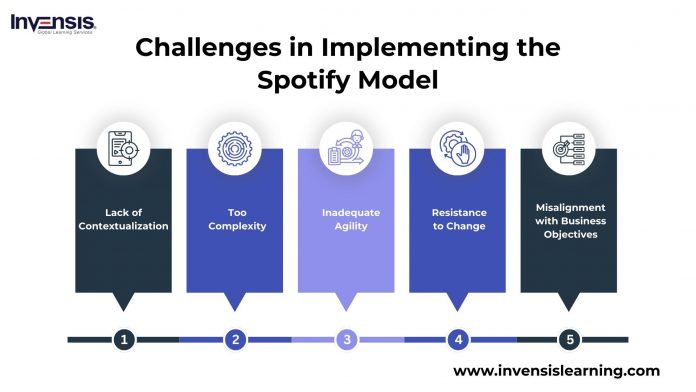
Implementing the Spotify Model can be challenging6 due to its lack of clear guidelines, the need for cultural alignment, and complexities in scaling teams. Leadership must adapt to a servant-leadership style, and managing inter-team dependencies requires custom processes, making organizational transformation essential for success.
Are Changes Brewing for Agile Practices?
The shift away from traditional frameworks like SAFe isn’t unique to Spotify. Across industries, organizations are reevaluating their Agile practices and questioning whether the methodologies they’ve been using still align with their evolving needs. As businesses increasingly prioritize speed, customer-centricity, and innovation, there’s a growing recognition that one-size-fits-all frameworks may no longer be effective.
We’re witnessing a trend where organizations are moving toward more hybrid or tailored approaches that blend elements of various Agile methodologies. For example, some companies are combining aspects of SAFe’s governance with the Spotify Model’s emphasis on team autonomy, creating a balance between alignment and flexibility. This signals a broader transformation in Agile, where companies are exploring what works best for them rather than rigidly adhering to any single framework.
How to Decide Which Methodology Works Best for Your Organization
Selecting the right Agile methodology is no longer just about following popular trends—it’s about aligning the approach with your organization’s unique culture, goals, and market environment. Here are some factors to consider:
- Company Culture: If your organization thrives on creativity and autonomy, a more flexible model like Spotify’s may be a better fit than a process-heavy approach like SAFe. Conversely, if you need consistency and governance across large teams, SAFe might offer the structure you need.
- Business Complexity: Highly regulated industries or those requiring strict compliance may benefit from the standardization offered by frameworks like SAFe. However, for tech-driven industries with a focus on rapid innovation, a lighter framework with less prescriptive processes might work better.
- Team Maturity: The experience and maturity of your Agile teams play a critical role in determining which methodology will be most effective. Experienced teams may thrive in an environment with more freedom, while less mature teams may benefit from the clear guidance provided by SAFe.
- Customer-Centricity: Organizations that prioritize customer delight need Agile models that emphasize adaptability and quick response times, allowing teams to iterate based on real-time feedback. Models like Spotify’s offer this flexibility without sacrificing alignment.
A Broader Vision for the Future of Agile Practices
As Agile practices continue to evolve, the focus is shifting from rigid frameworks to adaptive, people-centric models. The future of Agile is likely to emphasize:
- Increased Hybridization: Companies will increasingly create custom approaches by combining aspects of multiple Agile methodologies, tailoring frameworks to fit their specific needs.
- Greater Emphasis on Autonomy and Trust: The shift toward empowering teams to make their own decisions will continue, with leadership providing alignment rather than micromanaging processes.
- A Push for Outcome-Driven Practices: Future Agile practices will likely prioritize delivering incremental value and outcomes over strictly following processes. This focus on outcomes will ensure that Agile remains customer-centric while also addressing internal efficiency.
- Integrating AI and Automation: As technology advances, AI-driven insights and automation tools will likely become integral to Agile practices, enabling faster decision-making and streamlined workflows.
The Takeaway: Navigating Agile’s Future
The transition from traditional models like SAFe to more adaptive ones like the Spotify Model reflects a broader trend of Agile evolving to meet the diverse and dynamic needs of modern businesses. As organizations face new challenges and opportunities, the key is to stay flexible, prioritize continuous learning, and be willing to experiment with different approaches until you find what works best.
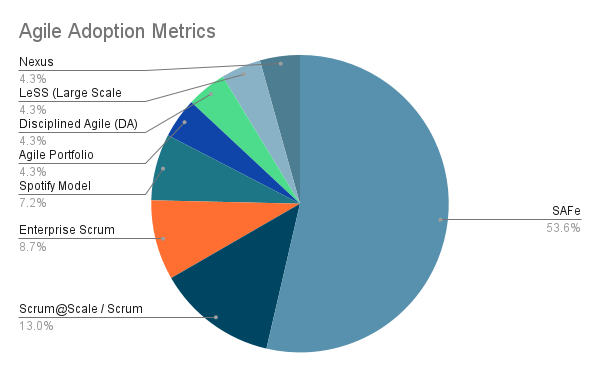
Ultimately, the future of Agile is about customization7, where each organization builds a framework that aligns with its unique context, culture, and strategic goals. Whether you lean toward SAFe, Spotify’s model, or a hybrid approach, the focus should always be on enabling teams to deliver value efficiently while staying aligned with customer needs and business objectives.
References
- https://www.tcgen.com/agile/spotify-agile-model/ ↩︎
- https://echometerapp.com/en/agile-statistics/ ↩︎
- https://www.parabol.co/resources/agile-statistics/#agile-adoption,-transformation,-and-trends ↩︎
- https://digital.ai/resource-center/analyst-reports/state-of-agile-report/ ↩︎
- https://businessmap.io/blog/spotify-model ↩︎
- https://www.invensislearning.com/blog/spotify-model-in-agile/ ↩︎
- https://assets.kpmg/content/dam/kpmg/be/pdf/2019/11/agile-transformation.pdf ↩︎



 Parijat Dutta
Leave a comment